
The two main factions in Karnataka's Congress party -- one led by Siddaramaiah and the other by D K Shivakumar -- are both contenders for the chief ministership. Both groups have fought hard to get their choice of MLAs the party ticket, notes Aditi Phadnis.

The fund industry may have embraced machines and robots, but managing money still needs the human touch

We must heed what the CJI has said. Challenging every judgment of the central government is inviting chaos, asserts Shreekant Sambrani.
'All regulatory agencies must be made Constitutional bodies like the Election Commission, the Supreme Court, and the CAG.' 'That way they will become independent of the minister,' recommends T C A Srinivasa-Raghavan.

'The immediate attempt by China is to get its way and gain territory through small steps without having a full-scale war.'
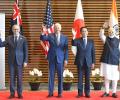
India has the ability in all respects to be a great power and address our security challenges in the best national interests, says Commodore Venugopal Menon (retd).

'It is not a matter of fixing the military problem up there in the Himalayas and the retreat of the two militaries.' 'India has to find a way to correct the racist and very patronising views of India in the Chinese mind.'
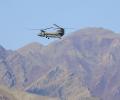
'Our strategy should be to 'hold the line' in the north on the Sino-Indian land frontier, but maintain and, if possible, enlarge India's current edge in the maritime south.'

Capital markets regulator Sebi on Tuesday asked listed companies to work towards splitting the roles of chairman and managing director before the April 2022 deadline, as the new directive is not aimed at weakening the position of promoters. Listed entities were initially required to separate the roles of chairperson and MD/CEO from April 1, 2020 onwards. However, based on industry representations, an additional time period of two years was given for compliance. The regulation will now be applicable to the top 500 listed entities by market capitalisation, with effect from April 1, 2022.

Ashok Kumar Gupta, chairman of the Competition Commission of India (CCI), has never minced words while talking about the giant technology companies, referring to them on multiple occasions as "centres for entrenched and unchecked dominance". The anti-trust regulator has, in fact, been cracking down on big technology companies such as Google, Apple, Facebook, and others, after they were hauled up by regulators and lawmakers in Europe and Australia. However, in several instances, existing regulations have prevented the CCI from going all out against these companies for anti-competitive activities.

'Indian doctors have also been wary of patients learning about drugs and brand names.' 'Probably harking back to the Brahmanical tradition of preserving information and knowledge from getting polluted by the lower classes,' says Ambi Parameswaran.
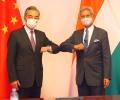
'We've never really been in the situation of having a difficult time with the Chinese and an increasingly difficult time with the Russians along with a relationship with the Americans which is important.'

"If India truly wants to be a superpower," Dr Abhijit Vaidya tells Kangana Pandiya, "48 per cent of our people cannot be malnourished. We need to ensure health for all."

United Nations General Assembly on Friday appointed Antonio Guterres as the UN Secretary General for a second term beginning January 1, 2022, days after the powerful Security Council unanimously recommended his name to the 193-member body for re-election.

The woman said that she will consult her lawyer and decide on the next steps.
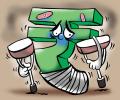
Ahead of the general elections, a slew of states and also the Centre had doled out sops to the marginalised sections, including the farmers and the poor.
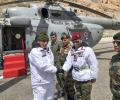
The defence minister has to correct a major asymmetry. Will his discipline come in the way?
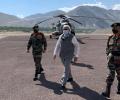
As the China factor enters the body politic of India with greater potency, its consequences will certainly be far-reaching, note Harsh V Pant and Vinay Kaura.
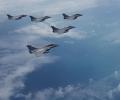
'We were against politicisation of the defence acquisition process. It was a question of capability of the air force'

'India and China have the wise and sage leadership to steer this complex relationship in the coming decades.'
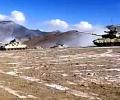
Once the tanks roll back, a zero-based assessment of future equations with China is necessary. Given the conflict situations that China is imposing on India time and again, the red, amber and green lines of interactions with China need to be laid down and communicated in no uncertain terms, asserts Srikanth Kondapalli, the leading China expert.

'Under National Security Advisor Ajit Kumar Doval and now Chief of Defence Staff General Bipin Rawat, India began to actively work on Pakistani internal faultlines with a possibility of the break-up of Pakistan as the only solution,' observes Colonel Anil A Athale (retd).

'The Chinese fault lines are tremendous and we need to exploit them.'

The BRICS model will need to demonstrate the efficacy of a second alternative governance structure to reform the Bretton Woods legacy.

Governments make budgets to retain and consolidate their hold on power, not to please opponents or economists. They do so by trying to gratify as many as possible without causing harm to the others, says Shreekant Sambrani.
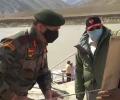
'We should not minimise the seriousness of Chinese encroachments because their perception is different.' 'Nor should we fall into the trap of accepting so-called 'buffer zones' in areas of overlapping claims. We cannot have buffer zones in our own territory,' asserts Ambassador Shyam Saran, a former foreign secretary.

The entire gamut of China's activities is aimed at keeping India on tenterhooks, cause fatigue to its troops and keeping its security system unstable, so that it cannot play a meaningful role in international geopolitics as an effective partner of the US and Japan, observes Lieutenant General Syed Ata Hasnain (retd).

'If you behave like a nail, the adversary will behave like a hammer.'

'While visits and personal meetings are useful, changes of strategic significance have occurred recently, with Beijing trying to take the lead which Modi must take note of.'
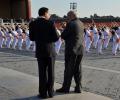
How should sophisticated countries deal with others that have a huge body but a small brain?
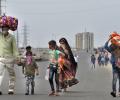
'While the poor have little say in shaping India's intellectual or public discourse, they do have a significant role in deciding political outcomes,' points out Roshan Kishore.

'Gotabaya will expect India to observe the red line.' 'He even dispensed with any gesture welcoming India as an interlocutor on the Tamil issue.' points out Ambassador M K Bhadrakumar.

'The travesty of recent Indian strategic thought is it emerges not from our brains, but from whatever part of the anatomy that secretes the prickliest hormones,' says Shekhar Gupta.
'They have done in Eastern Ladakh what we did in Dokalam in 2017.'
'India's relationship with China has been and will continue to be complex, delicate and sensitive,' says Rup Narayan Das.
In fact, given the current tensions and massed troops on both sides, there is a danger that the LAC will become more like the Line of Control with Pakistan, a heavily fortified and strongly defended border where weapon fire exchanges regularly occur. Indeed, Stratfor Worldview research has listed a sharp increase in new Chinese facilities along the LAC in 2019-20.

'It is nobody's contention that uncomfortable questions regarding national security should not be raised. But that is a topic for another day and another time when the immediate threat has faded,' argues Vivek Gumaste.
'He is a former civil servant and has complete control over the administrators.' 'He should have sorted it out before it reached such a stage.' 'How did he allow the stalemate to go on for so many days?'

Lost in this maelstrom is the unasked question about what are the secrets the government really needs to keep? One can appreciate the need to keep news about movements of troops secret. But what is the need of sealing, and sequestering away the bulk of the work being done by ministries dealing with economic and social welfare, asks Sunjoy Joshi.

Assembly elections in Himachal Pradesh and Gujarat are over. Another set of state elections is due in 2018. Here's an assessment of the next round of the electoral challenge and how it could change India's political equations.
